
[Book Review] Mirrorland (2021)
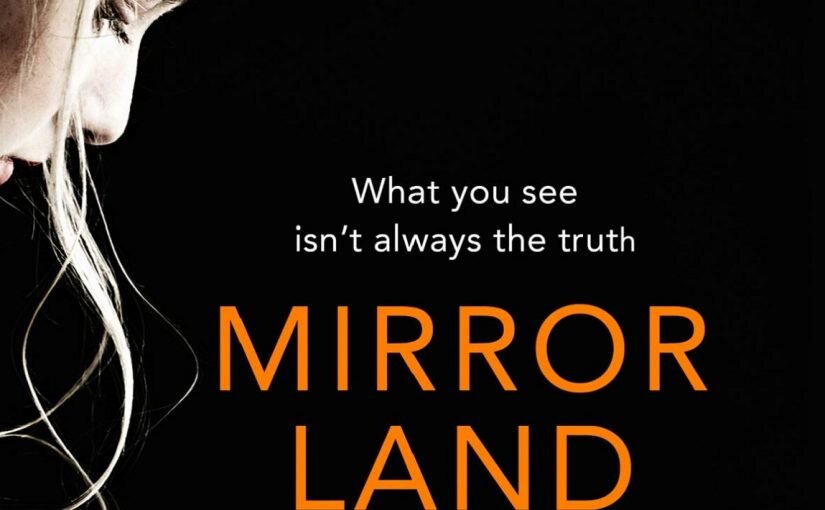
There is no shortage of horror films about the complicated relationship between sisters, and earlier this year, a horror novel that focuses on this relationship was published: Scottish writer Carole Johnstone's Mirrorland. As with other sister-focused horror, it explores the idea that losing a sister alters the life and identity of the person left behind intensely – so much so that it can make them feel like half a person – and it addresses how people cope with childhood trauma.
Mirrorland's narrator is Cat, a young Scottish woman caught somewhere between hapless and depressed, with nothing (and no one) to guide her. A dozen years before the story begins, Cat relocated to Los Angeles after a huge falling-out with her twin sister El, but the severed relationship still looms over her life like a storm cloud. When Cat gets the news that El is missing in a boating accident and thought to be dead, she returns to Edinburgh to unravel the mystery left behind by her sister. As her twin, Cat doesn't believe the news: she knows deep in her soul that she would have felt it if her twin had passed away.
Throughout the winding course of Mirrorland, there are dual mysteries at play. Cat is searching for the truth about El, and the reader is gathering clues about the twins' childhood. Cat reveals that the two girls grew up with their mother and maternal grandfather, and very quickly, it becomes apparent that their childhood home was anything but happy – but the details are murky, and it seems like Cat is reluctant to acknowledge exactly what went on in their family home. The combination of the shared trauma the twins endured and the years they've spent apart have worn on Cat, who is lonely and adrift.
As children, the sisters created a twisted imaginary world in their basement to cope with what they were experiencing upstairs. This world is painted vividly in the book – and in an odd twist, adult El has moved back into the girls' childhood home, and so this is where Cat returns to find out what happened to her. Their basement is still there, alive with the ghosts of the past. And so is Ross, the boy both twins loved in their youth, who grew up to marry El.
It's hard to imagine a room accommodating everything the sisters imagined – from the Americana-themed Clown Café to the ominous pirate ship Satisfaction (haunted by the spectre of Blackbeard) to the wildlife-rich Kakadu Jungle – but eventually, the level of detail and Cat's insistence on the Mirrorland they've created breaks down the disbelief of the reader until they can imagine what it must have been like to escape to the musty basement with the twins.
The twins' secret world is reminiscent of the fantasy land built by the two enmeshed friends in Peter Jackson's haunting film Heavenly Creatures (based on the true story of two girls whose obsessions led to murder) and the dark alternate reality of the boarding school roommates in Susan Swan's novel The Wives of Bath (which was loosely adapted into the queer classic Lost and Delirious).
Mirrorland expands on the idea that girls react to hostile or outright abusive childhoods by creating their own realities as a way to cope with trauma. As Cat describes their special world, "Once upon a time, it was rich and full and alive. Gloriously frightening and steadfastly safe. Exciting beyond measure. Hidden. Special. Ours." As opposed to the dangerous world upstairs, their Mirrorland was something Cat and El could control.
Although told completely from Cat's perspective (save for some yellowed diary entries from a young El), El is a huge presence in Mirrorland. Despite the time apart, the bond still exists between the sisters; as Cat realizes, "[B]uried under twelve years of anger and hurt and resentment is the memory of all the times we'd lie in the Kakadu Jungle holding hands, fighting to stay awake so we wouldn't be the first to let go."
Tension and paranoia build as the curtain slowly draws back on what exactly Cat and El were escaping – and the question becomes, did they really escape at all? Or are they still trapped in an alternate reality of their own making after the trauma of their childhood warped their minds?
The answers are revealed bit by bit, and Mirrorland is the rare book where there's no way that the reader can guess how the story will end. There are whiplash-inducing twists and turns as the reader (along with Cat herself) slowly learns what the two sisters went through. Although at times Cat is an unreliable narrator as a result of her skewed view of reality, Mirrorland is ultimately a triumph in showing the power of the sisters' bond, and how it's sometimes the relationships between people that ultimately save them.



RELATED ARTICLES
![[Book Review] Tradwife (2026)](https://images.squarespace-cdn.com/content/v1/5fe76a518d20536a3fbd7246/1772486876449-UAV7VIO5G32H0EKC2Y1B/Trad+Wife+HB.jpg)
![[Book Review] The Book of Queer Saints Volume II (2023)](https://images.squarespace-cdn.com/content/v1/5fe76a518d20536a3fbd7246/1697187383073-U78VOF5WVDHI9YE8M98A/Screenshot+2023-10-13+at+09.52.31.png)
![[Book Review] Wylding Hall (2015)](https://images.squarespace-cdn.com/content/v1/5fe76a518d20536a3fbd7246/1695484930026-PFRK7O26SLME4JIC49EW/Screenshot+2023-09-23+at+16.59.04.png)
![[Book Review] Penance (2023) by Eliza Clark](https://images.squarespace-cdn.com/content/v1/5fe76a518d20536a3fbd7246/1695481011772-L4DNTNPSHLG2BQ69CZC1/Screenshot+2023-09-23+at+15.54.07.png)
![[Book Review] The Exorcist Legacy: 50 Years of Fear](https://images.squarespace-cdn.com/content/v1/5fe76a518d20536a3fbd7246/1691328003764-IASXC6UJB2B3JCDQUVGP/61q9oHE0ddL._AC_UF1000%2C1000_QL80_.jpg)
![[Book Review] Nineteen Claws And A Black Bird (2020)](https://images.squarespace-cdn.com/content/v1/5fe76a518d20536a3fbd7246/1685872305328-UE9QXAELX0P9YLROCOJU/62919399._UY630_SR1200%2C630_.jpg)
![[Book Review] Manhunt (2022)](https://images.squarespace-cdn.com/content/v1/5fe76a518d20536a3fbd7246/1683911513884-1Q1IGIU9O5X5BTLBXHV9/53329296._UY630_SR1200%2C630_.jpg)
![[Book Review] Eyes Guts Throat Bones (2023)](https://images.squarespace-cdn.com/content/v1/5fe76a518d20536a3fbd7246/1682344253308-4AAFX12YD84EVJBYNJBZ/7e617654-8d9e-407e-8cde-33a97df84dcf.__CR0%2C0%2C970%2C600_PT0_SX970_V1___.jpg)
![[Book Review] Cursed Bunny (2017)](https://images.squarespace-cdn.com/content/v1/5fe76a518d20536a3fbd7246/1680266256479-2E2XJT4T8CGAMOUB7XAL/298618053_5552736738082400_5168089788506882676_n.jpg)
![[Book Review] The Aosawa Murders (2020)](https://images.squarespace-cdn.com/content/v1/5fe76a518d20536a3fbd7246/1678009096264-7QOOFO5PI9LAX47L3GF6/51054767.jpg)







EXPLORE
![[Film Review] Redux Redux (2025)](https://images.squarespace-cdn.com/content/v1/5fe76a518d20536a3fbd7246/1772709237214-NWJO8S5RA2RI5KHGBDRP/Redux+Redux+%28Blue+Finch+Film+Releasing%29+%2801%29.jpg)
![[Film Review] The Convenience Store (2026)](https://images.squarespace-cdn.com/content/v1/5fe76a518d20536a3fbd7246/1772706929814-S9SCNO48X7OAAUXDGW6Z/%5Bmain%5DDSC07956+%281%29.jpg)
![[Film Review] Red Riding (2026)](https://images.squarespace-cdn.com/content/v1/5fe76a518d20536a3fbd7246/1772815841313-70WFC6UZR8R3D8K1QQNB/Red_Riding_MASTER_310725_4KDCI_PRORES4444.00_07_53_05.Still012.png)
![[Film Review] Queens of the Dead (2025)](https://images.squarespace-cdn.com/content/v1/5fe76a518d20536a3fbd7246/1772708277363-T21QMHC11OQWUEWE9JRA/Queens+of+the+Dead+%281%29.jpg)
![[Film Review] Bury the Devil (2026)](https://images.squarespace-cdn.com/content/v1/5fe76a518d20536a3fbd7246/1772707319010-7HUFW2VLHJ5RKZ3EH8C4/Bury+the+Devil_1.png)
![[Film Review] Jailbroken (2026)](https://images.squarespace-cdn.com/content/v1/5fe76a518d20536a3fbd7246/1771753986825-4CM6ZCTLWAZYUGB1IBMP/Jailbroken+%C2%A9+2026+Jailbroken+Film%2C+Ltd.+All+Rights+Reserved.jpg)
![[Film Review] Iron Lung (2026)](https://images.squarespace-cdn.com/content/v1/5fe76a518d20536a3fbd7246/1772663006181-UCSTWEIJZBJRNR97BJR9/Screenshot+2026-03-04+at+22.10.26.png)

![[Editorial] 9 Essential Hagspolitation Horror Films and Where to Stream Them](https://images.squarespace-cdn.com/content/v1/5fe76a518d20536a3fbd7246/1770475320934-ABFCNG7QZCG95DHZW2TH/Hagsploitation+list.jpeg)
![[Editorial] 7 Valentine's Day films for the horror lover in your life](https://images.squarespace-cdn.com/content/v1/5fe76a518d20536a3fbd7246/1771008023919-TKX6A1Y1GKGQ20ONPNYD/nekromantik.jpg)
![[Editorial] Seven Horror Hits That Haunted Our Hiatus](https://images.squarespace-cdn.com/content/v1/5fe76a518d20536a3fbd7246/1769674801188-7W482NENPO0GN4CDHV5N/7+HORROR+HITS+HIATUS.webp)
![[Editorial] Oscar Nominations 2026: Where to stream all the horror picks](https://images.squarespace-cdn.com/content/v1/5fe76a518d20536a3fbd7246/1769113319180-4INRRNMZK4DZLHRSUXX5/rev-1-GRC-TT-0026r_High_Res_JPEG-1024x372.jpeg)
![[Editorial] 10 Films & Events to Catch at Soho Horror Film Fest 2023](https://images.squarespace-cdn.com/content/v1/5fe76a518d20536a3fbd7246/1700819417135-299R7L4P0B676AD3RO1X/Screenshot+2023-11-24+at+09.41.52.png)
![[Editorial] 9 Horror Nintendo Switch Games To Play](https://images.squarespace-cdn.com/content/v1/5fe76a518d20536a3fbd7246/1697214470057-3XZXX8N4LYIMDFWS6Z3P/Screenshot+2023-10-13+at+17.20.13.png)
![[Mother of Fears] Mothering in Silence in A Quiet Place (2018)](https://images.squarespace-cdn.com/content/v1/5fe76a518d20536a3fbd7246/1696445921315-HZJ2DZYQIH6VVWXBO2YL/Screenshot+2023-10-04+at+19.52.29.png)
![[Editorial] “I control my life, not you!”: Living with Generalised Anxiety Disorder and the catharsis of the Final Destination franchise](https://images.squarespace-cdn.com/content/v1/5fe76a518d20536a3fbd7246/1696444478023-O3UXJCSZ4STJOH61TKNG/Screenshot+2023-10-04+at+19.30.37.png)
![[Editorial] 5 Female Focused Horror Book Recommendations](https://images.squarespace-cdn.com/content/v1/5fe76a518d20536a3fbd7246/1696441981361-52EQCTJ7AT2QF1927GM7/919xtm6d3fL._AC_UF894%2C1000_QL80_.jpg)
![[Editorial] 5 Slasher Short Horror Films](https://images.squarespace-cdn.com/content/v1/5fe76a518d20536a3fbd7246/1696358009946-N8MEV989O1PAHUYYMAWK/Screenshot+2023-10-03+at+19.33.19.png)

Donec id justo non metus auctor commodo ut quis enim. Mauris fringilla dolor vel condimentum imperdiet.